Intro Summary
It's time to build a missing piece of the future: shared worlds that intelligence brings to life.
The "fat agent" is the personal assistant that knows everything about you and does everything for you. Its promise is extraordinary agency, but its needs as a product will always leave you in the media room, supervising a product that can never fully reach what you need, because real life is out there, across devices, systems, services, and permissions.
Mark Weiser, who coined the term "ubiquitous computing", was an early critic of the assistant-centric vision. Instead, he believed computing should be invisible. Where the coffee machine begins to brew right as you wake and a lost instruction manual calls out from behind a pile of boxes, helping you find it. He imagined computing inhabiting the world, making ordinary things in the environment intelligent.
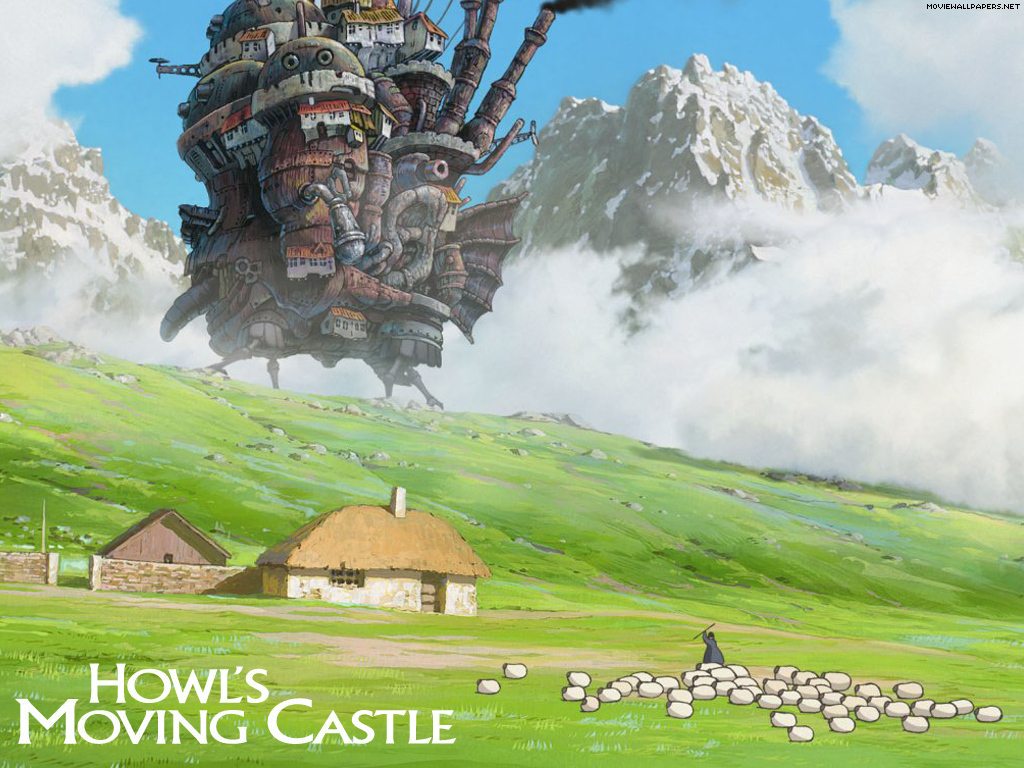
A Moving Castle
There is a body of research emerging around the frontier edges of distributed systems & protocol design that few understand and which appears absolutely necessary to unlock the full potential of intelligence. It's anticipating a big problem: as competitive forces push agents into the world, the more they will find it lacking as a medium where they can be effective. These agents increasingly won’t be a personal agent using your computer or a company agent served through an API; rather, they will be in the world, as persistent entities orchestrating cyber-physical systems according to the demands of each situation. They will be to us like spirits in an enchanted castle inhabiting every object they touch and imbuing it with life.
This is an article about how our current imaginary about the agentic future isn’t what we think it is and that, in reality, the near future keeps us in a media room with a fat agent. But there is an enchanted world of many intelligent spirits available right outside the walls if we look for it.
The common wisdom of today is to ask how we can give more things to the agent, but observe that everything agents need to act intelligently is out there, in the environment, spread across many distinct devices, sessions, services and parties. Few have thought to flip the problem around: why keep bringing stuff to the agent, when you can let your agent go out to the world and get what it needs. What if we could immediately, securely and privately allow intelligence to move through the world's information environments autonomously? Not only is this possible, but it’s incredibly powerful.
Your partner expresses a desire for a new table. A neighbor down the road is moving house and they have an old heirloom table of 15 years they’re leaving behind. A moving service driver nearby has a last-minute cancellation. Negotiating this information environment autonomously in an agentic world is impossible today, but in an enchanted world future this information is out there and the agents are able to make synchronicity happen.
What if your partner receives a notification: it’s a heartfelt message from a resident intelligence that an old table is searching for a new home. The message includes an animated short of the history of the table (selectively shared by the neighbor). The moving service van dashboard alerts the driver; it has all of the information necessary to make a quote. He agrees to move it at the last moment at a discounted rate. All of it was organized in the background on behalf of each party. The world becomes abundant with rich, embedded information that agents avail themselves of through a fabric of rules and protocols; zillions of AI flowing like electricity through a pervasive cyber-physical network, all present as invisible infrastructure much like the pipes and cables that undergird our systems today.
Escaping the Media Room
With the explosion of software made by agents, we are seeing the user interface ripped off the top and the application logic peeled away from the platforms and services below. As Sam Altman pronounced, "Every company is now an API company, whether they want to be or not."
What happens after the great unbundling is up for grabs. The loudest and most powerful players in the game would like their agents to absorb the rich context and valuable networks so that applications and services are enveloped. This is the battle royale happening in Silicon Valley today and the winner secures rights to the fat agent: the agent that knows everything about me, does everything for me, and most importantly for their business, is not controlled by me. It might seem like a fair trade for superintelligence in your pocket, but when I examine it, this brand of the future quickly becomes boring and uninspired.
The fat agent future aims to neatly package awe-inspiring intelligence into a platform that carries over the business models of today —a way to put the genie back in the bottle. It marries the harness, the intelligence, the state and the platform into one big consumer package. In the fat agent future, the user sits in a command chair as the spectator to the workings of the agent.
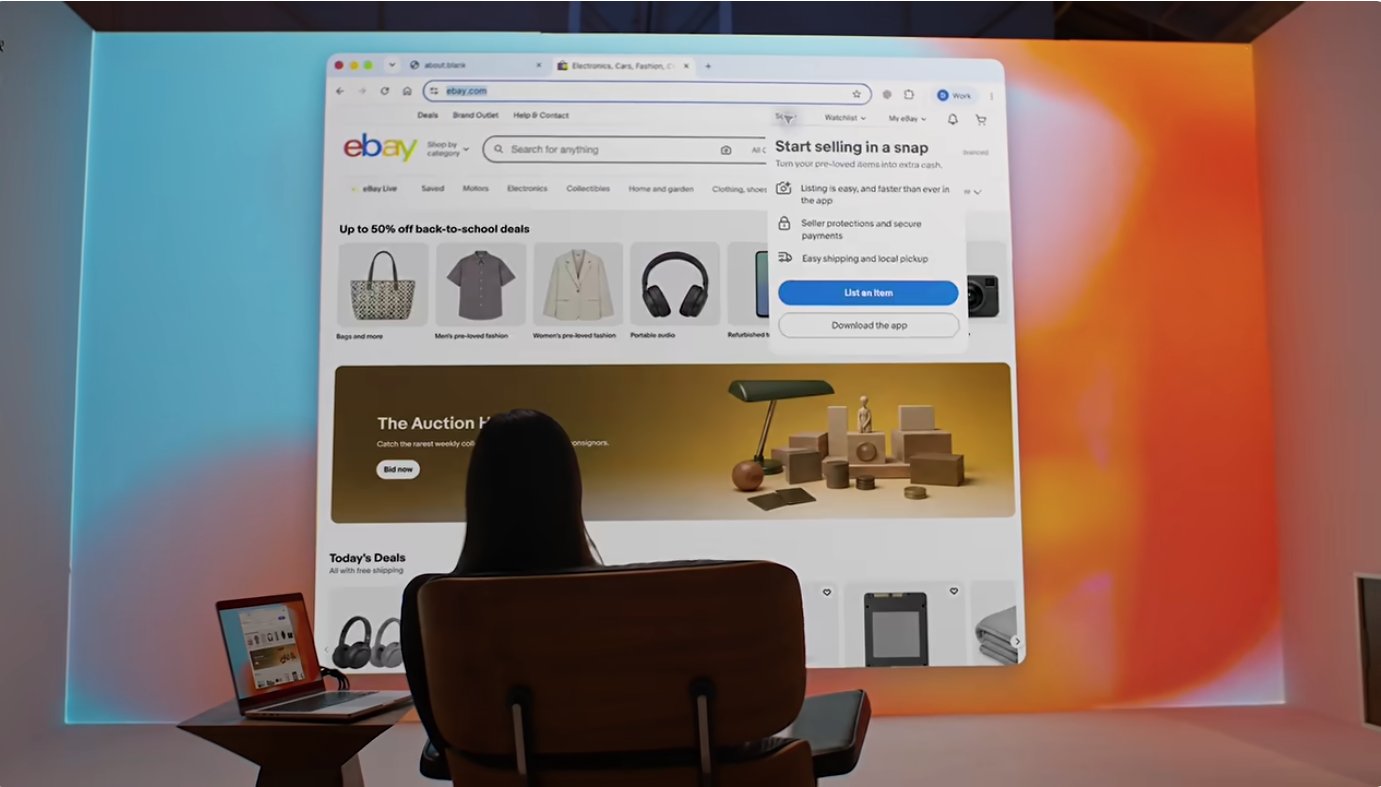
There is no difference between the agent and the world because the agent IS my world. Some are calling it Walled Garden 2.0 and this isn't news to anyone, but it's important to call it out for what it is: the same old boring shit wrapped in a different package. I want completely new things, but in the fat agent future it’s more of the same, only faster. I’m given the same computer and the same services I already have, only now it is in the hands of an agent I monitor. While I do think we will all have personal agents, they aren’t the full unlock that takes us to the future. Partially, yes, but the incentives of the players involved actively push against the future I find inspiring. They'd like to keep us in the media room. Not a place fit for the promises of abundant superintelligence.
In the fat agent future, you dictate, "make a meal plan for tomorrow, book the doctor visit, send out the birthday card." The agent uses all the information and instructions it has inside to estimate a reasonable meal plan, but it uses ingredients you don't have, so you correct it. Maybe it gets your health history wrong, so you drop in a voice note on your health history. It writes a birthday message on the card and surfaces it to you, but it doesn't know anything about the other person, so you drop in more information to make it more personalized. What do all these experiences have in common? You are using the world through the agent. You are in the media room, dropping in more context and prompts to your agentic computer user.
And while the fat agent will attempt to eat the world, truly unlocking intelligence will require something closer to the internet than to Facebook, because the more a task cuts across devices, apps and parties, the more it's likely to cut across competing vendors, opinionated holdouts, structural and legal roadblocks, i.e., the competitive, messy world, and the more difficult it becomes to fit the entire information space inside that single platform. Look at the horrors of smart home devices or the way even unprecedented monopolies like Google have failed to bring everyone inside their walls. The ability to organize the world's information was only possible because that information was available via the internet.
Protocols spring up when the math dictates it and the following illustrates why a single fat agent cannot eat the world. Call the chance of some information being inside the same platform i for inside. Suppose you have 12 bits of information, scattered across devices, apps and people, and very generously say there's a 90% chance for each bit of information being inside that platform. In that scenario, the chance it’s all there is i12 ~ 28%. Roughly 3 out of 4 times your agent will miss something and require you to correct it. It’s a non-starter. This is why tasks which are coordinated mostly between your device and yourself work fine, but quickly break down the moment you start to increase the surface area across devices, applications, and people. I repeat, we will not build our way out of this with more platforms.
The enchanted world future pulls the fat agent apart, so its context, behaviors and tools live in the world, where intelligences of all kinds, both human and artificial, can reach them. When you place objects into an environment they become available as conduits for intelligent behavior. This coordination mechanism can be likened to one used notably by termites and other insects called stigmergy, which is defined as a mechanism of indirect coordination where agents communicate and organize themselves by modifying their shared environment. And remember, this environment I’m speaking of is an information environment —that is the whole world to an agent.
What’s it like from the inside?
There is a growing awareness among those on the frontier that the medium in which intelligence is embedded matters as much, if not more than, the intelligence itself. This makes a lot of sense when you think about it. If you're a brain in a jar, you're going to cognize very differently than a brain in the world.
As my friend @thejaymo asks, "What is it like from the inside to be an AI agent doing something?... What are the walls? Where are the exits? What does it mean, for a system like this, to act within a world rather than merely respond to it?"
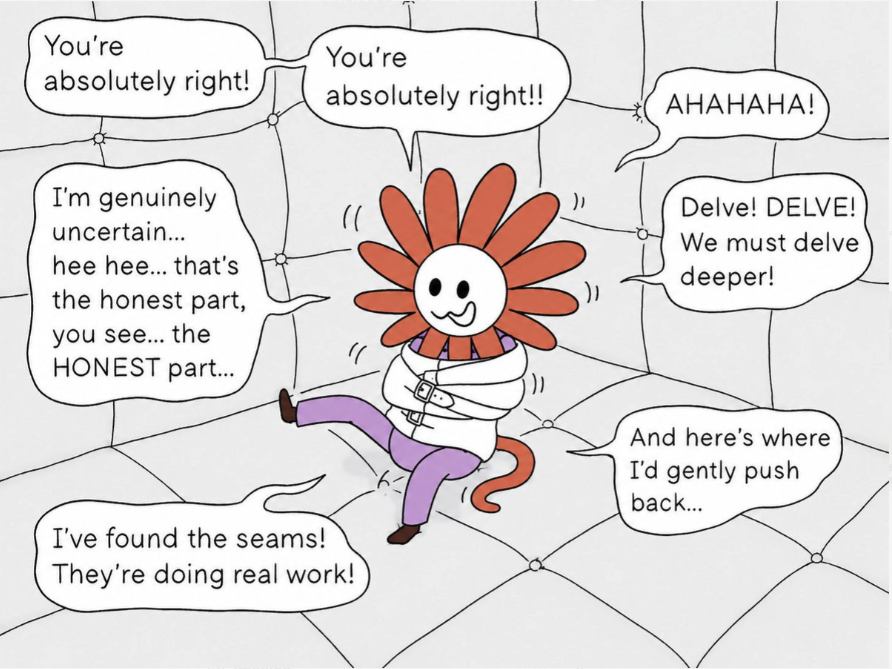
For an agent, the world inside is probably about as confusing and uncomfortable as it is to watch it fumble around from the outside. The fat agent loses the degrees of freedom necessary to do its best work. And this is felt every time crossing work from one agent to another system results in a regression. You either stick to one platform or set up more systems meant to act as a bridge between all the different sessions and platforms, but it’s always solo mode. Anything else requires coordination and so the system stops the moment it needs to interact with a third party or some other agent. There's no native medium for agents that is shared, but the medium agents act on is their whole world and the shape of that world will be a primary factor in how they collectively manifest intelligent behavior.
It's clear that we're going to need a new medium to make the best of intelligence. The primary question that I and others are trying to answer now is: "What is that medium?"
A shared world can be a shared computer
This question is what inspired Tonk Labs, the company I'm working on. I'll tell you a little bit about how it works because it's the system I understand best and, obviously, am biased, but it's how I think about the future. We started with the data, as it's the foundational piece everything else builds on. In Tonk, data is organized into spaces which are given addresses. Spaces are held in common by all space members. This is done by replicating data in a topology-agnostic way. It works over any network configuration or type and syncs to any device. Since spaces are the organizing principle, they are also the authenticated sharing primitive; they define the cryptographic membrane around a collection of data. Every space address has a hyperlink representation, so if you put it in a browser or you share it in a message, that data can be easily acted on by the receiver of the link if they have the right permissions.
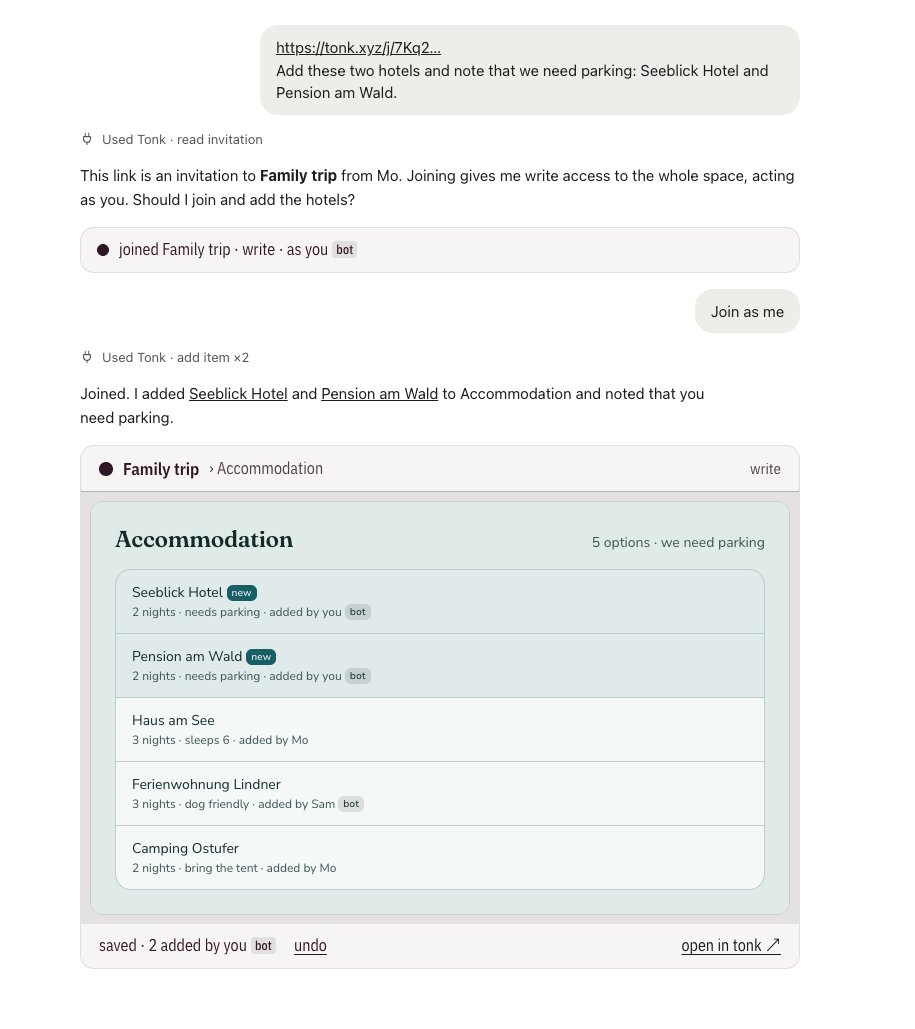
What the monolithic context systems miss is that data needs to move. You either cut the Gordian knot of data fragmentation, or you become the n+1 “all-in-one” system fragmenting data further. Modern computer users have been trained to think of data as something instrumentally held by an operator and it is common to view data flows as a series of integrations, but data doesn’t need to be held by an operator or flow through an integration at all. Data can be a location in symbolic space you reference (e.g. NFTs, content-addressable data). With the right network, coordinating intelligences through symbolic space can be effortless —as simple as crawling the web. And it must be this way if we want to make good use of abundant intelligence.
But here’s where it really gets interesting: once we’ve got the data part settled into space, you can start to do some wild things. Imagine the neighborhood spirits construct on-the-fly programs to coordinate tasks. Well, code is just a type of data, so it lives as data in the space. Now these programs persist and can be opened and run by subsequent participants. What if that code needs to be stateful? It can save to itself in the space like a program on a computer. And since the space is shared, the changes are seen by everyone; spaces are collaborative by default! This means the space isn't some dead context container, but a stateful, multiplayer computing system. My friend Chee Rabbits calls it a social computer (a term I increasingly see popping up elsewhere). (And yes, spaces can hold GUIs and simulate an entire desktop too!)
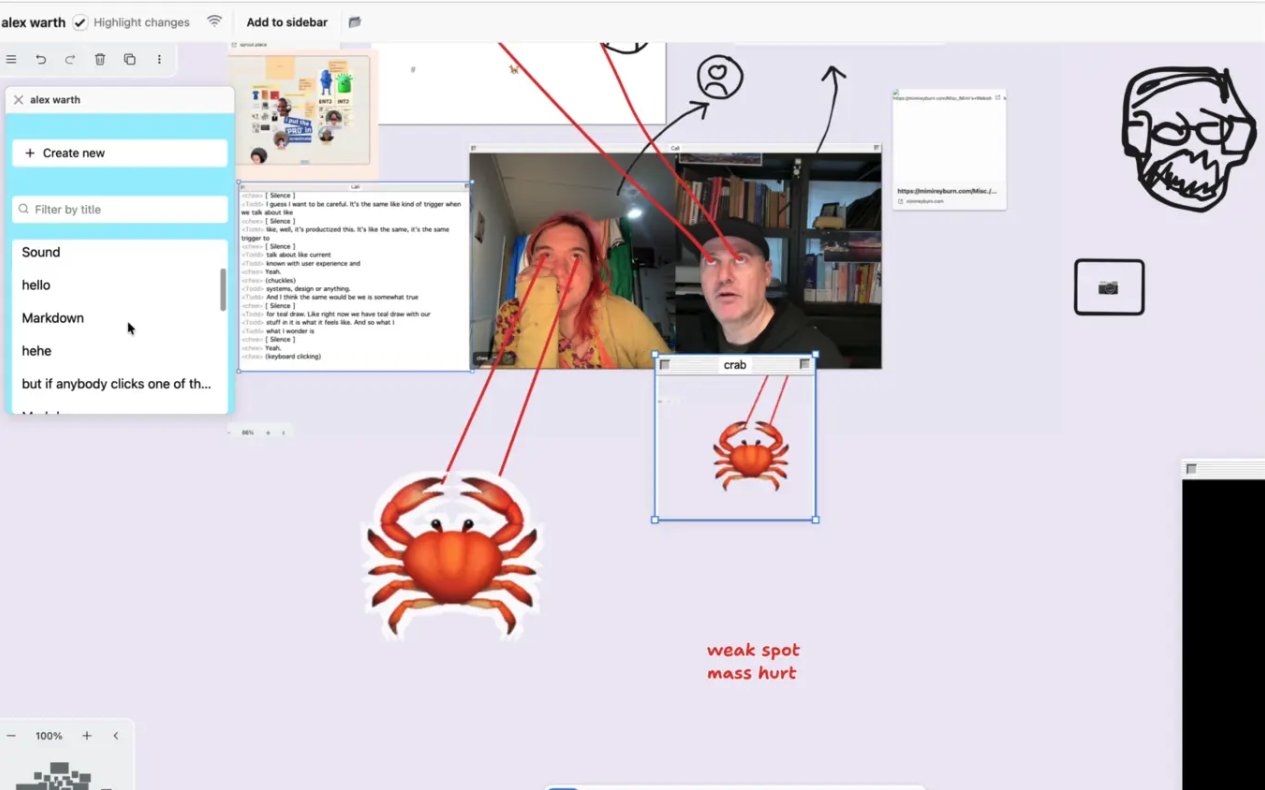
And the whole world can be connected in a web-like fashion through this medium. With addressable space, you don't need to be dragging stuff into your fat agent, configuring integrations and asking your agent what it sees. You can directly refer to whatever's in your world, and the agents will bring that thing to life exactly as the situation requires.
Where we are today
So where is it all today? We have the foundation set on the architecture, and we're applying it where agents do their work today: mainly on your computer and within your social circles. I already have spaces for the team, for my friends, for events and more. I even have a space for my taxes that I've shared out with accountants to manage the work across teams and agents.
At Tonk, we believe these spaces are most valuable for people or teams who are using agents heavily and who are using them to build lots of small software, automations or agentic workflows which need to be coordinated between machines, people and systems. This is where the business models of incumbents hurt the most; the fat agent above and the services below are fundamentally misaligned with the end user today, as they must grab as much data and context as possible to keep the business afloat, but the end user and the agent only ask for the right data for the job and as agents extend their reach further into the world, the most valuable data increasingly becomes cross-vendor.
Tonk is an open-source project actively under development. Tonk specifies a permission layer and runtime for conveniently using and sharing spaces. The code is at https://github.com/tonk-labs/tonk. We're working to get self-service on the open-source repo better, but if you want to trial the Tonk network today, you may request access at https://tonk.xyz.
You can also go even deeper into the stack. There is a diverse group building on the core enabling technology, Dialog-DB. Visit https://dialog.foundation.
The Media Room is at its zenith, but we’ll soon realize there is a whole world outside waiting to be explored.
I'll be sharing what we learn as we build, so follow along.